Pesquisa e processo
Redefining Fetishism within Contemporary Art and Culture
This article explores the multi-faceted nature of fetishism, moving beyond common taboos to examine it as a profound form of aesthetic and material devotion. By analyzing scientific classifications, statistical data, and the influence of iconic artists like Mapplethorpe and Olaf, the piece illustrates how non-standard interests are integrated into the broader human experience. Furthermore, it highlights the work of Arjan Spannenburg, specifically his focus on the submissive experience and the radical trust required to translate visceral devotion into fine art.

Beyond the Taboo: Understanding the Spectrum of Devotion
The concept of fetishism has long been relegated to the shadows of societal discourse, often misunderstood as a mere deviation. However, a deeper journalistic investigation reveals that fetishism is rooted in a profound devotion to specific objects, materials, or attributes. While the term frequently carries a sexual connotation, researchers define it more broadly as a strong dedication to something particular. This intrinsic pull toward materials like latex, leather, or nylon is not a modern anomaly but a phenomenon documented since antiquity.
In the contemporary art world, this dedication is viewed through a lens of aesthetic appreciation. By stripping away the layers of prejudice, we find that these fascinations often stem from a complex interplay of sensory input and cultural influences. The tactile nature of leather and the reflective qualities of rubber offer a rich visual language that artists have utilized to explore the boundaries of human identity and attraction.

The Scientific Paradox: Classification and Cultural Perception
The classification of fetishism remains a point of contention within scientific communities. Its inclusion in the DSM-5 (Diagnostic and Statistical Manual of Mental Disorders) is controversial, drawing parallels to historical classifications that were later removed as societal understanding evolved. Critics argue that fetishism should be recognized as a sexual preference or an aesthetic orientation rather than a psychological disorder.
Statistical Insights into Human Desire
Studies conducted in Europe provide a revealing glimpse into the prevalence of these interests. Research involving over a thousand participants indicates that interests in lingerie, nylon, and leather are far more common than the general public might assume. For instance, lingerie interest was noted by over seventy percent of participants in certain samples, while leather and latex maintained significant presence. These figures suggest that the "non-standard" is, in fact, a substantial part of the human experience.

The Artistic Influence: From Mapplethorpe to Olaf
The visibility and acceptance of fetish aesthetics in high culture owe much to the visionary work of legendary photographers and artists. Pioneers such as Robert Mapplethorpe and Erwin Olaf have played a crucial role in transitioning these themes from underground subcultures to the walls of prestigious museums. By focusing on the beauty, form, and symmetry of their subjects, they have invited the viewer to appreciate the aesthetic value of the fetish object.
The Biological and Cultural Origins of Attraction
Why does the human mind fixate on specific materials? Theories range from biological proximity in the brain's sensory processing centers to socio-cultural factors. In some cultures, specific body parts or garments carry heightened symbolic value. Interestingly, observations in primates, such as the famous gorilla Koko, suggest that these fixations may have deep evolutionary roots, transcending the human species and pointing toward a fundamental aspect of consciousness and sensory attachment.
Fetish Artwork Photography by Arjan Spannenburg
The artistic oeuvre of Arjan Spannenburg serves as a sophisticated bridge between raw subcultural expression and fine art photography. His work meticulously deconstructs the fetishistic gaze, focusing on the interplay between synthetic materials and the vulnerability of the human form. By utilizing high-contrast black and white techniques, Spannenburg elevates materials like latex and leather, often dismissed as mere provocations, to the status of classical sculptural elements. This connection is deeply rooted in the artist’s ability to capture the "strong devotion" that researchers define as the core of fetishism.
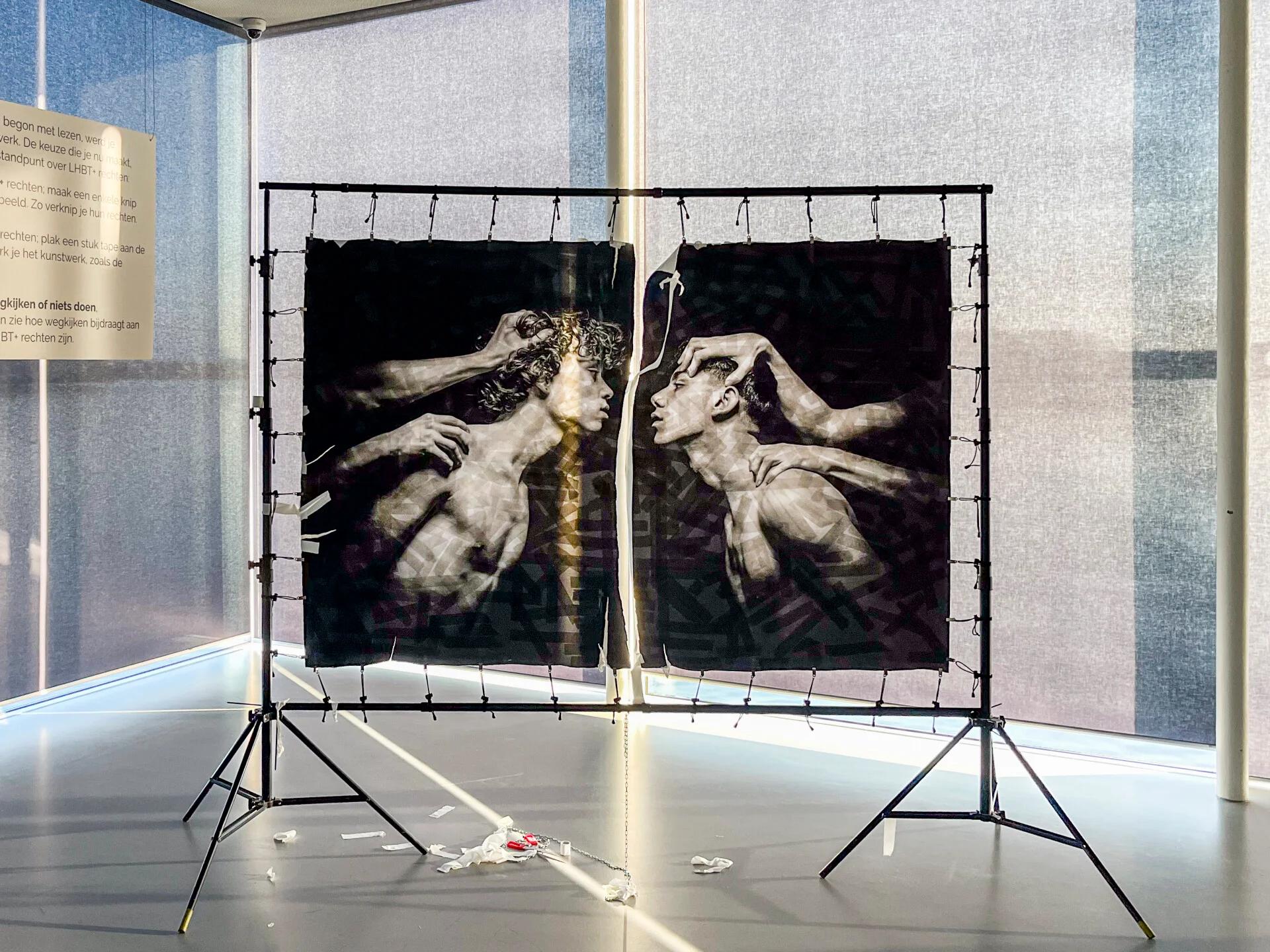
A defining characteristic of Spannenburg’s exploration is his focus on the submissive subject rather than the dominant figure. In his fetish-related artworks, the dominant party is typically absent from the frame, shifting the viewer's attention entirely toward the internal experience of the one being led. Spannenburg finds a profound fascination in the capacity for individuals to trust others at such a deep, visceral level. This dynamic relies on an unspoken agreement where boundaries are respected with absolute precision, creating a unique form of human connection. This mirrors the professional relationship between the artist and his subjects; the high level of vulnerability displayed in his work is a direct result of the subjects' trust in Spannenburg to translate their intimacy into profound visual art.